
The Best Trucks on the Market for Towing
Table of Contents
The Best Trucks on the Market for Towing
Whether you are hauling livestock across Hamblen County, towing a heavy travel trailer up into the Great Smoky Mountains, launching a pontoon boat at Cherokee Lake, or pulling commercial heavy equipment for a construction job in Jefferson City, having a pickup truck with genuine towing capability isn't a luxury—it is an absolute necessity.
However, finding the right truck for your specific trailering demands requires looking far beyond flashy headline marketing numbers. A truck's true towing capacity varies significantly depending on engine displacement, rear axle differential ratios, cab configuration, bed length, drivetrain (4x4 vs. 4x2), tire load ratings, and integrated towing packages. Selecting a truck that is under-rated for your specific trailer leads to dangerous trailer sway, overheated transmission fluid, accelerated brake wear, and dangerous mechanical failures along steep East Tennessee mountain grades like I-40, I-81, and US-25E.
To help truck buyers across Morristown, Dandridge, Greeneville, and surrounding East Tennessee communities make an educated and safe purchasing decision, we have expanded our ultimate truck towing guide. Below, you will find a truck towing specification comparison table, an essential trailering glossary, rear axle ratio guides, the 75% towing rule, gas vs. diesel evaluations, tire load index explanations, and helpful local inventory resources.
Truck Towing & Payload Specifications Comparison Table
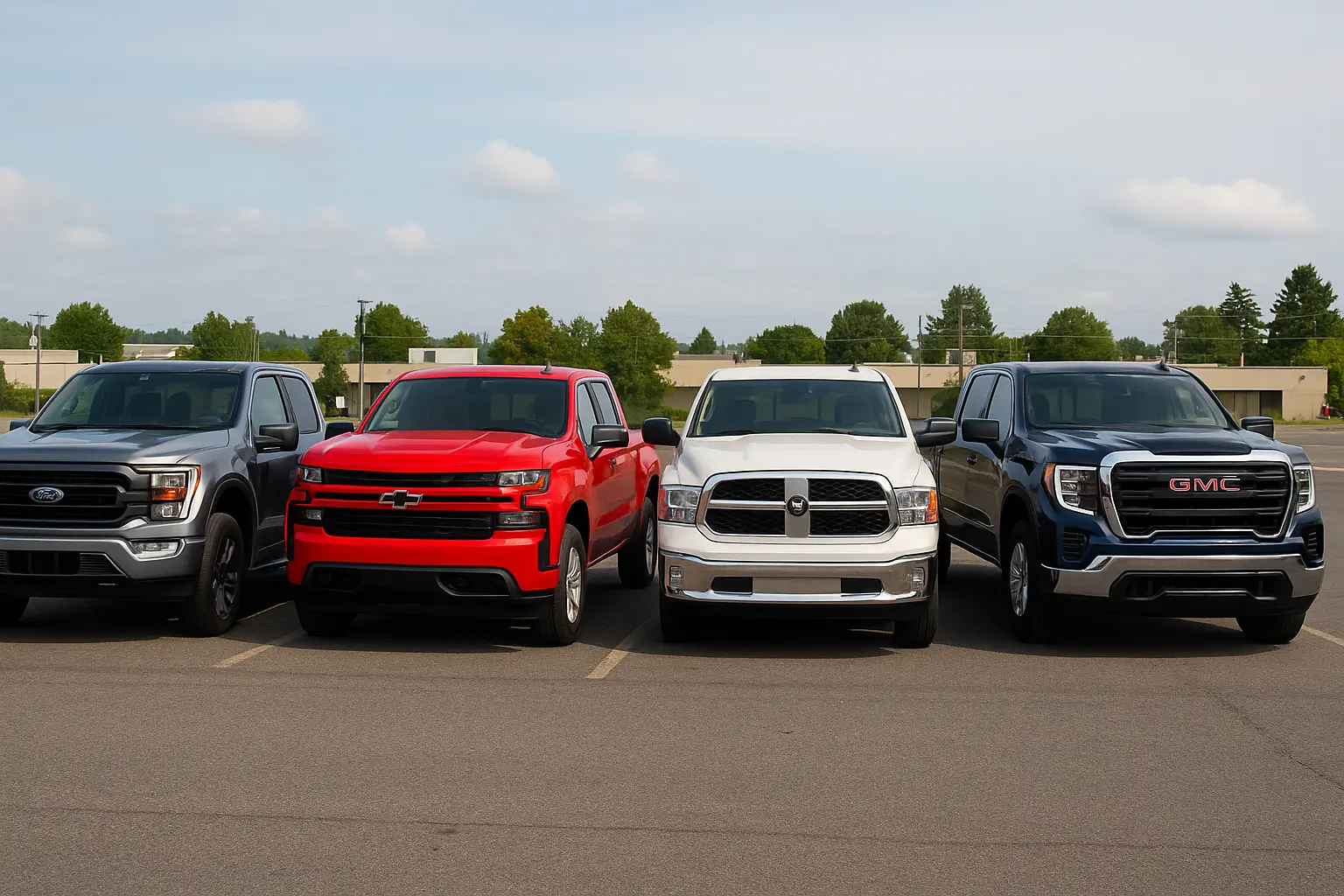
Compare engine outputs, torque ratings, maximum towing capacities, and maximum payload specs across top pre-owned and new pickup truck models at a glance:
| Truck Class & Model | Engine Powertrain Options | Horsepower / Torque | Recommended Axle Ratio | Max Towing Capacity | Max Payload Capacity |
|---|---|---|---|---|---|
| Toyota Tacoma (Midsize) | 2.4L Turbo 4-Cyl / 3.5L V6 | 278 hp / 317 lb-ft | 3.90 or 4.30 | Up to 6,500 lbs. | Up to 1,705 lbs. |
| Ford Ranger (Midsize) | 2.3L EcoBoost Turbo 4-Cyl | 270 hp / 310 lb-ft | 3.73 | Up to 7,500 lbs. | Up to 1,805 lbs. |
| Ford F-150 (Half-Ton) | 3.5L EcoBoost V6 / 5.0L V8 | 400 hp / 500 lb-ft | 3.55 or 3.73 Max Tow | Up to 14,000 lbs. | Up to 3,315 lbs. |
| RAM 1500 (Half-Ton) | 3.0L Hurricane I6 / 5.7L V8 | 420 hp / 469 lb-ft | 3.92 Anti-Spin | Up to 12,750 lbs. | Up to 2,300 lbs. |
| Chevy Silverado 1500 (Half-Ton) | 6.2L V8 / 3.0L Duramax Diesel | 420 hp / 460 lb-ft | 3.42 or 3.73 Max Trailering | Up to 13,300 lbs. | Up to 2,260 lbs. |
| RAM 2500 / 3500 (Heavy-Duty) | 6.7L Cummins Turbo-Diesel I6 | 420 hp / 1,075 lb-ft | 3.73 or 4.10 Dually | Up to 37,090 lbs. (Gooseneck) | Up to 7,680 lbs. |
| Ford Super Duty F-250 / F-350 (Heavy-Duty) | 6.7L Power Stroke V8 Turbo-Diesel | 500 hp / 1,200 lb-ft | 3.55 or 4.10 High Capacity | Up to 40,000 lbs. (Gooseneck) | Up to 8,000 lbs. |
Note: Towing capacities shown represent maximum equipped specifications (Example ratings). Always consult the official tire and loading information placard located inside your truck's driver-side door jamb for exact vehicle-specific limits. Explore our current inventory of quality pre-owned work and towing trucks in Morristown, TN.
Essential Towing Glossary: Defining Key Trailering Terms
Before connecting a trailer to your hitch, every truck owner must understand these critical weight and safety ratings to prevent exceeding legal limits or straining suspension components:
-
GVWR (Gross Vehicle Weight Rating):
The maximum allowable total weight of the truck itself when fully loaded. This includes the weight of the truck frame, engine, fluids, full fuel tank, driver, passengers, cargo in the bed, and the tongue weight exerted by an attached trailer. -
GCWR (Gross Combined Weight Rating):
The absolute maximum weight allowed for the fully loaded truck PLUS the fully loaded trailer combined. Exceeding your GCWR causes severe transmission overheating, suspension failure, and compromised braking performance. -
GAWR (Gross Axle Weight Rating):
The maximum weight that either the front or rear axle assembly can safely support. Rear GAWR is especially critical when placing heavy cargo in the truck bed or hauling large travel trailers. -
Curb Weight:
The baseline weight of the truck with a full tank of fuel and all standard operational fluids, but WITHOUT any passengers, aftermarket gear, cargo, or attached trailer. -
Payload Capacity:
The maximum total weight of cargo, passengers, tools, and gear you can safely carry inside the cab and truck bed. Formula: Payload Capacity = GVWR minus Curb Weight. Remember: Trailer tongue weight subtracts directly from your available payload capacity! -
Tongue Weight (TW) / Pin Weight:
The downward force that the trailer tongue exerts onto the truck’s hitch ball. For conventional bumper-pull trailers, ideal tongue weight must equal 10% to 15% of total loaded trailer weight. For fifth-wheel and gooseneck hitches, pin weight must equal 15% to 25%. -
Integrated Trailer Brake Controller (TBC):
An electronic module integrated into the dashboard that synchronizes the truck's hydraulic brakes with the trailer's electric or surge brakes, allowing smooth, proportional stopping without jackknifing. -
Differential Axle Ratio:
The mathematical ratio between the rotations of the drive shaft and the rotations of the rear wheels (e.g., 3.73:1). Higher numerical ratios (like 3.73 or 4.10) deliver greater low-end mechanical leverage for heavy towing at the expense of highway fuel economy.
Understanding Axle Ratios & Differential Gearing for Towing
One of the most overlooked factors in truck towing capacity is the Rear Differential Axle Ratio. Two identical trucks with the exact same engine can have wildly different towing capacities based solely on their differential gearing:
- 3.21 / 3.31 Axle Ratios (Highway & Economy Gearing): Engineered primarily for unladen highway fuel economy. Suitable for light towing (boats, jet skis, small utility trailers), but struggles to pull heavy loads up steep incline grades without frequent transmission downshifting.
- 3.55 / 3.73 Axle Ratios (Balanced Towing Gearing): The ultimate middle ground for half-ton trucks. Provides robust low-end launching power for travel trailers and horse trailers while maintaining acceptable fuel efficiency during daily commuting.
- 4.10 / 4.30 Axle Ratios (Heavy-Duty Towing Gearing): Designed for heavy commercial hauling, goosenecks, and steep mountain towing. Delivers maximum mechanical advantage to get heavy loads moving from a complete stop on steep inclines.
The Real-World "75% Towing Rule" for Safe Mountain Driving
While a truck manufacturer may advertise a maximum towing capacity of 10,000 lbs., experienced truckers in East Tennessee follow the 75% Towing Rule for safety, longevity, and peace of mind when navigating elevation changes:
The 75% Towing Rule: To account for passenger weight, full water tanks, supplies, steep mountain inclines, and high ambient summer temperatures, calculate your target trailer weight at 75% to 80% of your truck's maximum advertised towing limit.
Example: If your half-ton truck has a maximum towing limit of 10,000 lbs., target a loaded trailer weight of approximately 7,500 to 8,000 lbs. This 20% to 25% safety buffer prevents engine strain, transmission overheating, and severe brake wear when pulling long grades up the Great Smoky Mountains.
Midsize vs. Half-Ton vs. Heavy-Duty: Which Truck Class Do You Need?
Selecting the correct class of truck ensures you don't overpay for capacity you won't use—or worse, dangerously overload a vehicle that is too light for your trailer:
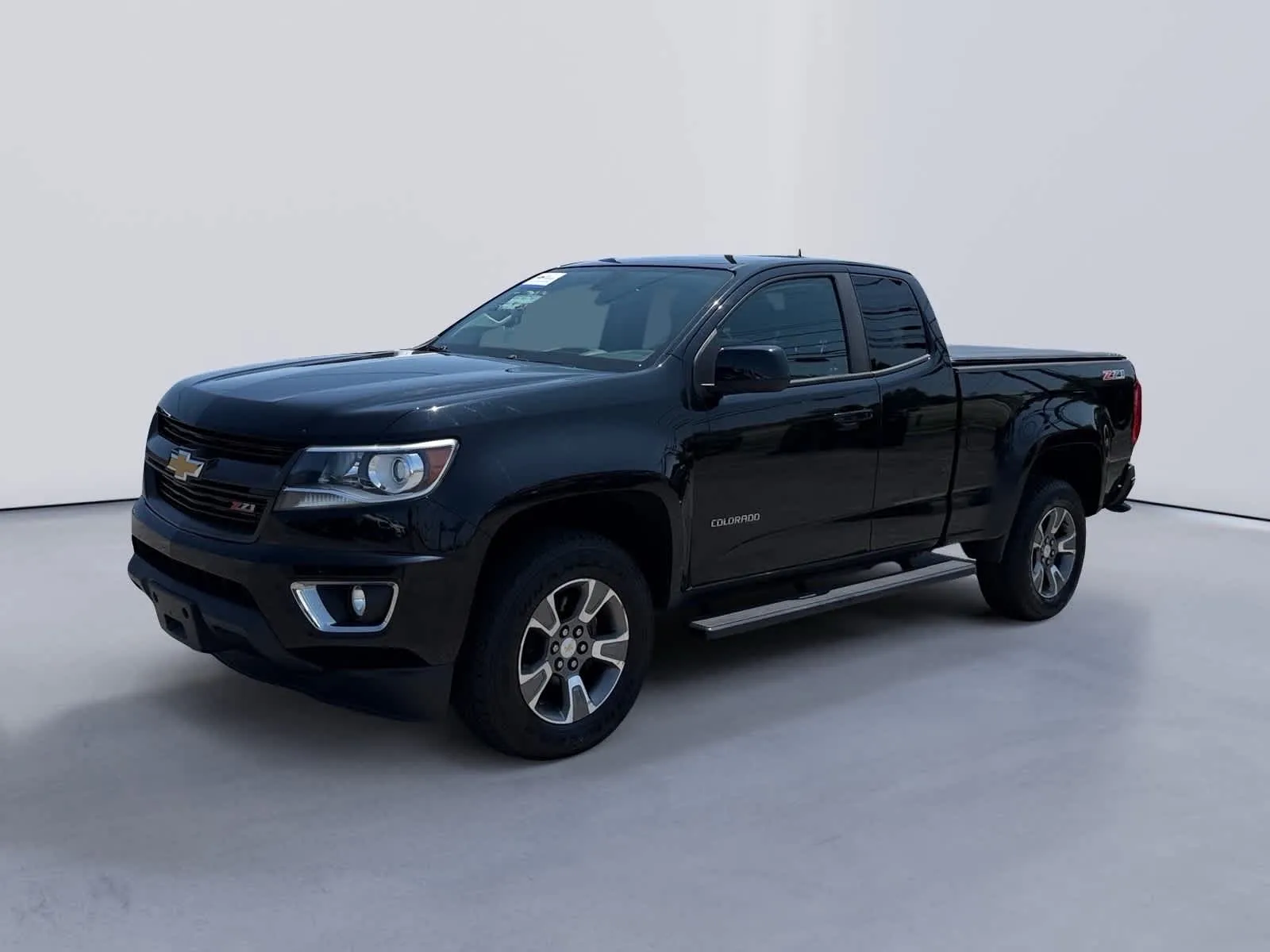
1. Midsize Trucks (e.g., Toyota Tacoma, Ford Ranger, Chevy Colorado)
Midsize trucks are ideal for daily commuting, weekend home improvement tasks, and pulling small utility trailers, single-axle fishing boats, jet skis, or pop-up campers up to 5,000–7,500 lbs. They offer easier parking in tight Morristown spaces and superior fuel economy. Read about whether you need 4WD or AWD for East Tennessee mountain driving.
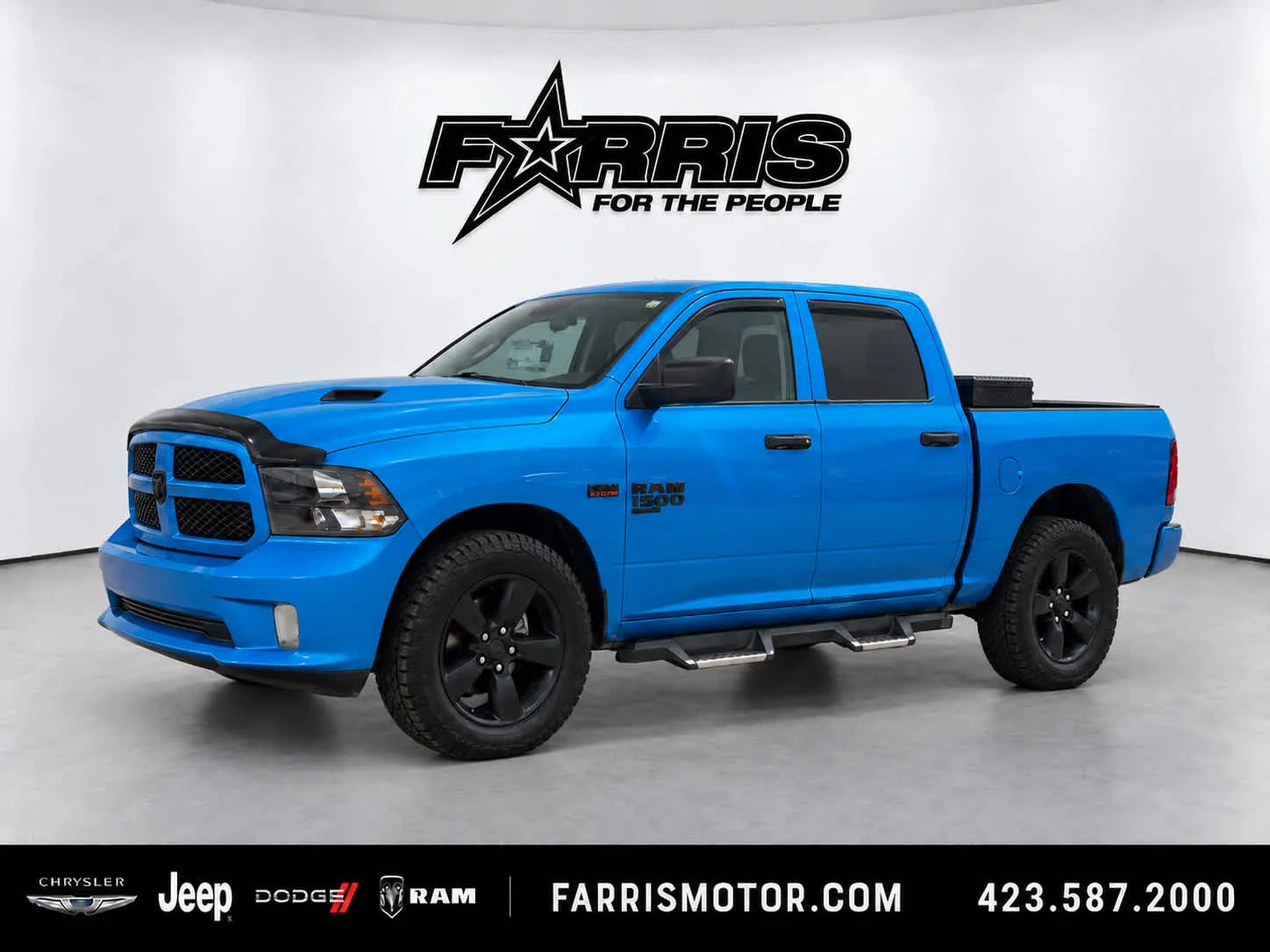
2. Half-Ton Trucks (e.g., Ford F-150, RAM 1500, Chevy Silverado 1500)
Half-ton trucks represent the sweet spot for most families, outdoor enthusiasts, and contractors. Capable of towing between 8,000 and 13,000+ lbs. when properly equipped, half-tons easily handle tandem-axle travel trailers, ski boats, horse trailers, and medium equipment trailers while offering exceptional cabin comfort.
3. Heavy-Duty Trucks (e.g., RAM 2500/3500, Ford F-250/F-350, Chevy Silverado 2500/3500)
If you haul heavy gooseneck trailers, large fifth-wheel RVs, multi-horse trailers, or heavy commercial machinery over 14,000 lbs., a heavy-duty (HD) truck is mandatory. HD trucks feature commercial-grade solid axles, massive high-torque diesel engines, heavy-duty cooling systems, and integrated exhaust brakes built for long mountain descents.
Gas vs. Diesel Engines for Towing in East Tennessee
Choosing between a gasoline engine and a turbo-diesel engine depends on your towing frequency, trailer weight, and terrain:
| Engine Feature | Gasoline Powertrains | Turbo-Diesel Powertrains |
|---|---|---|
| Purchase Cost | Lower upfront purchase price | Higher upfront engine option cost |
| Torque Delivery | High RPM torque curve | Massive low-RPM torque (1,000+ lb-ft) |
| Towing Fuel Economy | Lower MPG under heavy load | Superior fuel efficiency under heavy loads |
| Engine Braking Control | Standard gear downshifting | Integrated exhaust brake (Jake Brake) for steep descents |
| Ideal Use Case | Occasional weekend towing under 10,000 lbs. | Frequent commercial or RV towing over 12,000 lbs. |
For drivers navigating steep mountain grades around Gatlinburg, Pigeon Forge, and Boone, a diesel engine’s integrated exhaust brake provides exceptional control and reduces brake pad wear during long downhill descents. Learn more about evaluating long-term mechanical dependability and engine lifespan and what to inspect when evaluating a pre-owned truck.
Tire Load Ratings: P-Metric vs. Light Truck (LT) Tires
Your truck's tires are the only point of contact between your towing setup and the road. Standard half-ton trucks often ship from the factory with P-Metric (Passenger) tires, which are designed for a soft, quiet ride but have flexible sidewalls that can cause squishy handling and trailer sway under heavy loads.
- P-Metric Tires: Suitable for light loads and daily driving. Under heavy tongue weights, sidewall flex can cause a floating sensation at highway speeds.
- LT (Light Truck) Tires (Load Range D or E): Engineered with reinforced steel belts and stiffer 8-ply or 10-ply sidewall construction. LT tires handle higher inflation pressures (up to 80 PSI), reduce tire squirm, and handle heavy payload and tongue weights with total stability.
Essential Towing Technology & Active Safety Features
Modern pickup trucks come equipped with active electronic driver-assist technology that makes hitching and towing significantly safer:
- Weight Distribution Hitch (WDH): Uses spring tension bars to transfer tongue weight forward onto the truck's front axle and rearward onto the trailer axles, eliminating rear suspension sag and restoring steering control.
- Pro Trailer Backup Assist & Smart Hitching: Advanced camera systems like Ford’s Pro Trailer Backup Assist allow drivers to guide a trailer using a dashboard dial, while onboard scales measure live payload weight.
- Blind-Spot Monitoring with Trailer Coverage: Automatically extends radar detection zones along the full length of an attached trailer to prevent dangerous highway lane-change collisions on I-81 and I-40.
- Trailer Sway Control (TSC): Monitors yaw sensors to detect trailer fishtailing and automatically applies individual wheel brakes while modulating engine torque to stabilize the trailer.
Business Tax Benefits: IRS Section 179 for Work Trucks
If you purchase a truck for business or commercial operations, you may qualify for substantial federal tax write-offs under IRS Section 179:
- Trucks with a Gross Vehicle Weight Rating (GVWR) exceeding 6,000 lbs. qualify for accelerated depreciation and first-year expense deductions when used more than 50% for legitimate business purposes.
- This covers virtually all half-ton trucks (like the Ford F-150 and RAM 1500) and all 2500/3500 heavy-duty trucks.
Frequently Asked Questions
1. How do I find my truck's exact towing capacity?
A: Check the safety compliance sticker located inside the driver's door jamb. It lists your truck's specific GVWR, GAWR, and maximum payload capacity. You can also consult your owner's manual or input your VIN on the manufacturer's towing guide portal.
2. What happens if I exceed my truck's towing capacity?
A: Overloading a truck causes severe safety hazards, including extended stopping distances, severe frame and suspension damage, transmission overheating, tire blowouts, and loss of steering control. Exceeding legal weight limits can also void your insurance coverage in an accident.
3. Do I need a Weight Distribution Hitch (WDH)?
A: Most truck manufacturers recommend or require a Weight Distribution Hitch for bumper-pull trailers weighing over 5,000 lbs. A WDH levels your vehicle stance and restores front-axle traction and braking efficiency.
4. What is the difference between conventional towing and gooseneck/fifth-wheel towing?
A: Conventional towing uses a rear receiver hitch mounted to the bumper/frame. Gooseneck and fifth-wheel hitches mount directly over the truck's rear axle inside the truck bed, allowing the truck to handle substantially higher tongue weights and heavier trailers.
5. Is a 4x4 truck better for towing than a 4x2 (RWD) truck?
A: A 4x4 truck provides vital traction when pulling heavy boat trailers up slippery ramp inclines or navigating muddy job sites and winter slush. However, 4x2 trucks weigh slightly less, which gives them a marginally higher maximum payload and towing rating.
6. Can a half-ton truck tow a travel trailer or camper safely?
A: Yes! Modern half-ton trucks (like the Ford F-150 or RAM 1500) can comfortably tow most travel trailers weighing under 8,000–9,000 lbs. loaded, provided you use an integrated brake controller and weight distribution hitch.
7. Why is tongue weight so important when loading a trailer?
A: Too little tongue weight (under 10%) causes dangerous, uncontrollable trailer sway at highway speeds. Too much tongue weight (over 15%) overloads the truck's rear suspension, causing front-end float and loss of steering and braking control.
8. Do I need an electric trailer brake controller?
A: Tennessee law requires independent trailer brakes on trailers exceeding 3,000 lbs. gross weight. An integrated or aftermarket brake controller is required to operate electric trailer brakes safely.
9. How does elevation and mountain driving affect truck towing capacity?
A: Naturally aspirated gasoline engines lose approximately 3% of their power for every 1,000 feet of elevation gain due to thinner mountain air. Turbocharged gas and turbo-diesel engines compensate far better at higher altitudes.
10. Can I trade in a truck that still has a remaining loan balance?
A: Yes! You can trade in a vehicle with an existing loan balance. The dealership pays off your old loan balance directly and rolls any positive or negative equity into your new transaction. Learn about getting an instant online valuation for your trade-in.
Find the Perfect Towing Truck at Farris Motor Company
At Farris Motor Company, our truck specialists understand towing requirements inside and out. Whether you need a fuel-efficient daily driver or a commercial-grade heavy-duty workhorse, every pre-owned truck on our lot undergoes a rigorous multi-point inspection to ensure tow-ready reliability.
Visit our showrooms along West Morris Boulevard in Morristown or East Broadway Boulevard in Jefferson City today: