
What Is a Basic Car Maintenance Schedule and When Should You Do Each Service?
What Is a Basic Car Maintenance Schedule and When Should You Do Each Service?
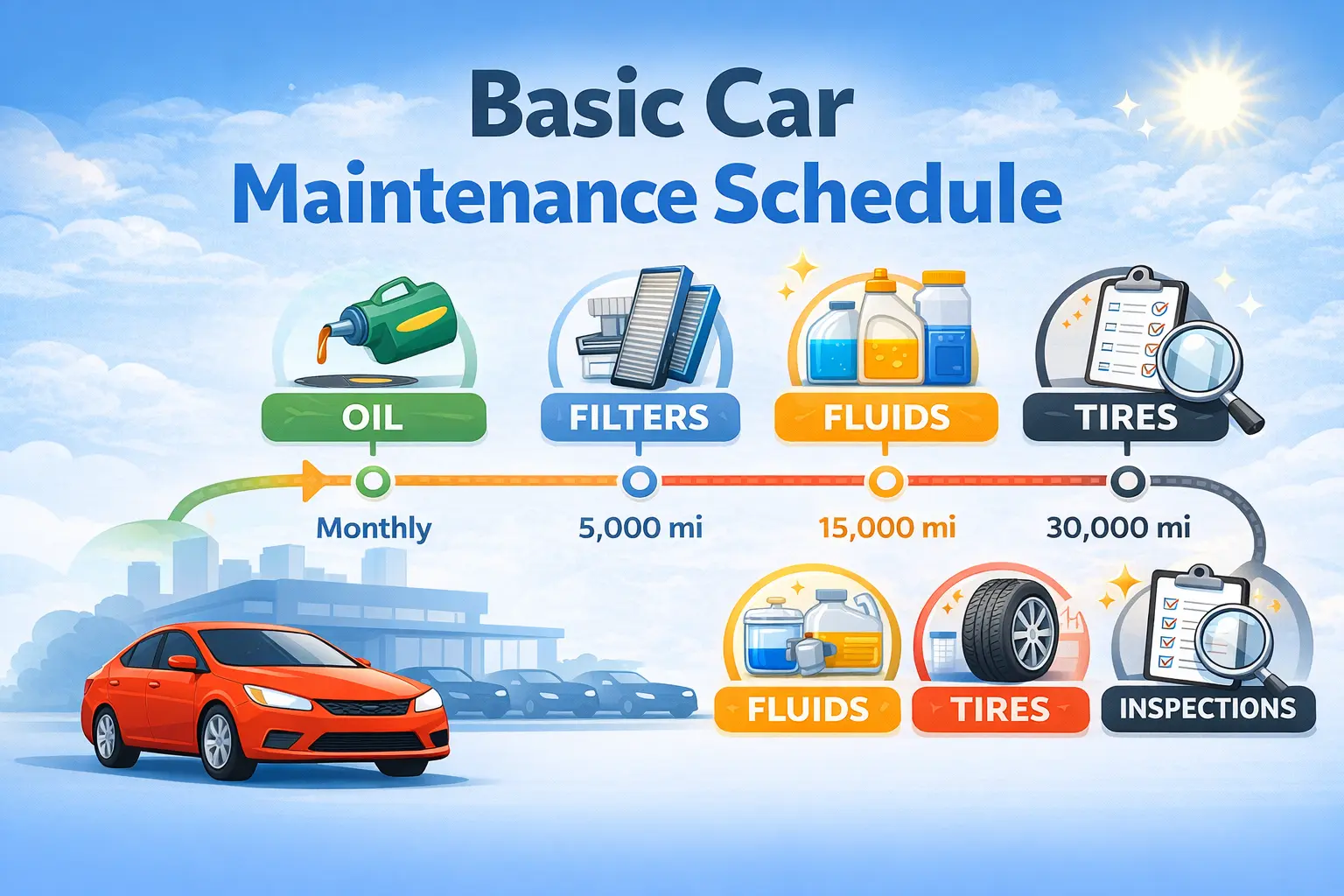
A basic car maintenance schedule is a simple timeline of routine services (oil, filters, fluids, tires, and inspections) based on mileage and time so your vehicle stays reliable, safe, and efficient.
If you drive in Morristown, Tennessee, temperature swings, winter road conditions, and frequent rain can make “simple” maintenance even more important. The good news is you don’t need a complicated plan to stay on track. You just need a clear checklist you can follow and a few smart habits.
This guide breaks down an easy maintenance timeline you can use for most cars, trucks, and SUVs. Always double-check your owner’s manual for your exact intervals, especially if your vehicle uses synthetic oil, has a turbo engine, or is under warranty.
Basic Maintenance Schedule at a Glance
Use this as your quick, everyday reference. If you don’t know your last service date, start at “Today” and reset the clock.
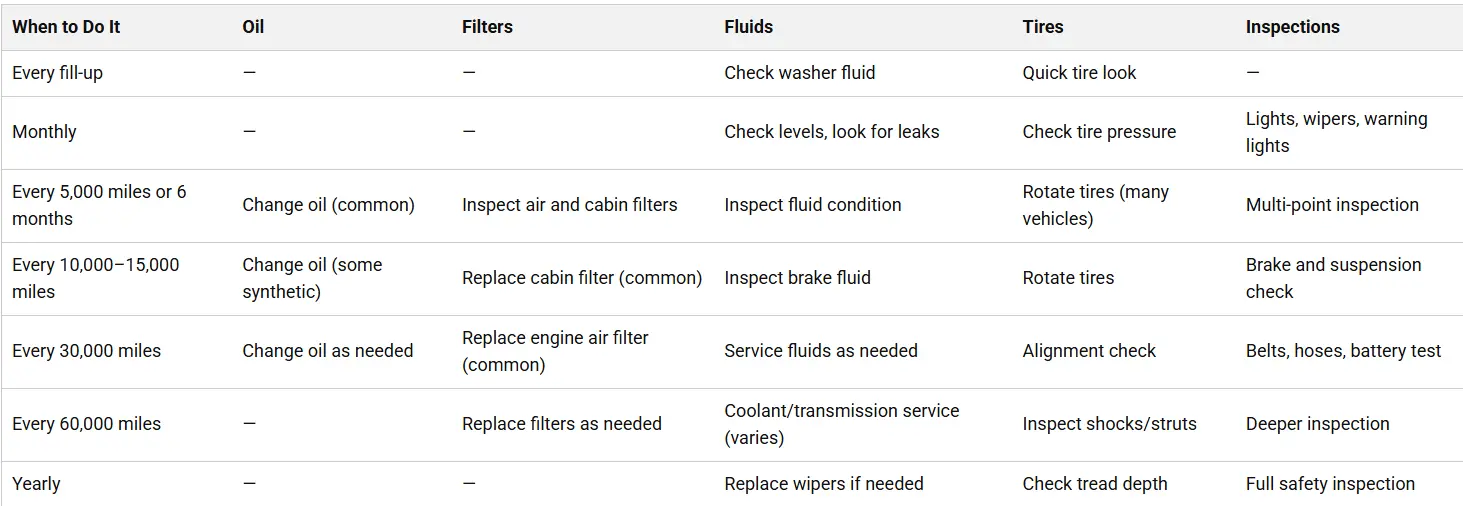
Intervals vary by vehicle and driving style, so treat this as a baseline. If you do lots of short trips, idle time, stop-and-go driving, or frequent highway speeds, you may need to service sooner.
Before You Start: Two Numbers That Matter
Mileage and time both count. Even if you barely drive, oil can age, filters can clog, and fluids can absorb moisture. If you drive a lot, mileage usually becomes the main driver.
Set a simple reminder in your phone for every 6 months and write down your current mileage. That one habit prevents most “I forgot” maintenance problems.
Oil: The Backbone of Your Schedule
How often should you change your oil?
Most drivers can follow one of these two rules. Use whichever comes first.
- Conventional oil: about every 3,000–5,000 miles or 3–6 months
- Synthetic oil: about every 5,000–10,000 miles or 6–12 months
If you’re not sure what oil your vehicle uses, check the oil cap, your last service sticker, or your owner’s manual. If you recently bought a used vehicle and don’t have records, it’s smart to change the oil and filter right away and start fresh.
Signs you should change oil sooner
Watch for rough idling, louder engine noise, or an oil level that drops between changes. If your oil looks extremely dark and gritty on the dipstick, it’s time. Also, Morristown’s temperature swings and winter driving can be tough on engines, especially if you sit in traffic often.
Filters: Small Parts, Big Impact
Filters protect your engine and improve cabin comfort. They’re inexpensive compared to the problems they help prevent.
Engine air filter
Most vehicles need an engine air filter replacement about every 15,000–30,000 miles. If you drive on dusty roads, do lots of highway driving, or notice sluggish acceleration, check it sooner. A clogged air filter can reduce fuel economy and performance.
Cabin air filter
Cabin air filters often need replacement every 10,000–20,000 miles, sometimes once a year. If your AC smells musty, airflow feels weak, or allergies get worse in the car, that filter is a common culprit. Morristown pollen seasons can make this one especially noticeable.
Fuel filter
Many newer vehicles have “lifetime” fuel filters inside the tank, while some older vehicles still have serviceable filters. If your model has a replaceable fuel filter, intervals can range widely (often around 30,000–60,000 miles). When in doubt, check the manual.
Fluids: Check Often, Service on a Schedule
Fluids are where a lot of used-car problems start, because they’re easy to ignore. A quick monthly check can catch issues early.
Monthly fluid checklist
- Engine oil level
- Coolant level (only check when the engine is cool)
- Brake fluid level
- Power steering fluid (if applicable)
- Transmission fluid (only if your vehicle has a dipstick and the manual says to check it)
- Windshield washer fluid
Service timelines for common fluids
These ranges are typical, but your manual is the final answer.

If you see puddles under your vehicle, smell something sweet (coolant) or burnt (oil/transmission), or notice shifting/braking changes, get it inspected quickly. Fluids are cheaper than major repairs.
Tires: The Easiest Way to Improve Safety
Tires affect braking, traction in rain, and fuel economy. In Morristown weather, good tread depth matters.
Weekly or monthly: tire pressure
Check pressure monthly, and always before a road trip. Use the tire placard in the driver’s door jamb, not the max PSI printed on the tire sidewall.
Underinflation can cause faster wear and reduced MPG. Overinflation can reduce traction and make the ride harsher.
Every 5,000–7,500 miles: tire rotation
Rotating helps tires wear evenly and can extend tire life. Many vehicles align rotation with oil changes, which makes it easy to remember.
Alignment and balance
If the steering wheel pulls, the car vibrates at speed, or tires wear unevenly, you may need an alignment or balance. A quick alignment check can save you from replacing tires early.
Quick tread test
Use the penny test or a tread depth gauge. If tread is getting low, especially on the inner edges, it’s time to take a closer look.
Inspections: Catch Problems Before They Leave You Stranded
A basic inspection routine keeps small issues from turning into expensive ones. Aim for a quick check monthly and a deeper check every oil change.
Monthly walk-around inspection
- Headlights, brake lights, and turn signals
- Wiper condition and windshield cracks
- Warning lights on the dash
- Visible tire damage or nails
- Strange sounds, smells, or vibrations
Every oil change: multi-point inspection
- Brake pad thickness and rotor condition
- Battery test and terminal corrosion check
- Suspension and steering components
- Belts and hoses for cracks or leaks
- Air filter and fluid condition check
If you’re buying a used vehicle, a pre-purchase inspection is one of the best ways to reduce surprises. Even a well-maintained car can hide issues you’ll only catch on a lift.
A Simple “Set-It-and-Forget-It” Timeline You Can Follow
If you want the easiest possible plan, use this routine:
- Monthly: check tire pressure and fluid levels
- Every 6 months: oil change (or sooner based on mileage), rotate tires, quick inspection
- Every 12 months: replace wipers if needed, replace cabin air filter (common), full safety inspection
- Every 30,000 miles: engine air filter (common), deeper inspection, review fluid services
- Every 60,000 miles: plan for bigger services like coolant or transmission fluid depending on your model
Track it in your phone notes or keep a small folder in the glovebox. Maintenance records also help resale value.
How Farris Motor Company Can Help
If you’re shopping for a dependable used vehicle and want one that fits your budget and lifestyle, Farris Motor Company in Morristown can help you find the right match. Browse our current selection of quality used cars, trucks, and SUVs. Ready to take the next step? Apply in minutes today.
Frequently Asked Questions About Basic Car Maintenance Schedules
How often should I change my oil if I drive mostly in the city?
City driving often means more stop-and-go and heat soak, so a 5,000-mile or 6-month routine is a safe baseline for many vehicles. If your manual recommends shorter intervals, follow that.
Is synthetic oil worth it for Tennessee driving?
Synthetic oil can handle heat better and often allows longer intervals, which is helpful in warm climates. The best choice depends on what your engine is designed for, so check your manual or oil cap.
When should I replace my engine and cabin air filters?
Engine air filters are often replaced around 15,000–30,000 miles, while cabin filters are commonly 10,000–20,000 miles or yearly. Replace sooner if airflow is weak, smells are present, or conditions are dusty or high-pollen.
What fluids should I check regularly, even if I’m not a “car person”?
Check engine oil, coolant, brake fluid, and washer fluid at least monthly. If anything is low repeatedly, have it inspected for leaks.
How often do tires need to be rotated?
Most vehicles do best with rotations every 5,000–7,500 miles. Pairing it with oil changes makes it easy to remember and helps tires wear evenly.
What’s the most important inspection for a used car?
A pre-purchase inspection is the most valuable because it can reveal hidden issues with brakes, suspension, leaks, and prior damage. It’s one of the best ways to avoid surprise repairs after you buy.