
How Much Is My Car Worth in Morristown, TN?
Table of Contents
How Much Is My Car Worth in Morristown, TN?
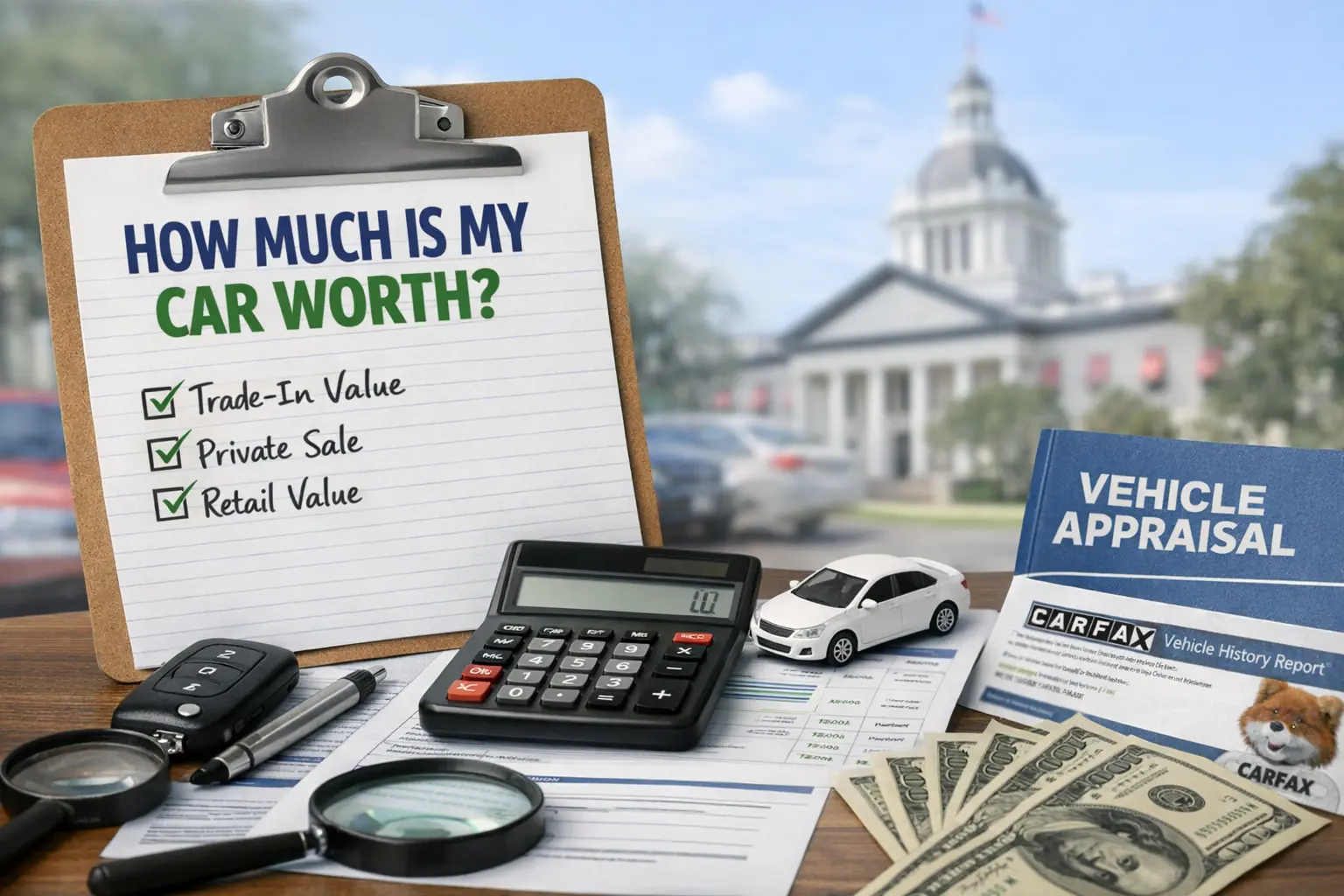
Your car is worth what similar vehicles are actually selling for in your area, adjusted for your exact trim, mileage, condition, and history.
If you want a quick, realistic range, aim for three numbers: trade-in value (low), private-party value (middle), and dealer retail value (high). Most online tools will show these tiers after you enter your VIN or plate, because options and trim levels matter more than most people think.
What is a “realistic range” for my car’s value?
A realistic range is a spread between what a dealer might offer you today and what a retail buyer might pay for a comparable vehicle. That spread exists because the selling path changes the risk, time, and reconditioning costs. Consumer pricing tools also note that values shift with local market conditions and even a dealer’s current inventory needs.
Here’s the simplest way to think about it:

When you’re pricing your car, you’re really picking a lane: fast and easy (trade-in) versus more money but more effort (private-party).
What factors determine how much my car is worth?
Your car’s value is mainly driven by supply-and-demand for that model, then adjusted by condition, mileage, equipment, and history. Valuation sites use large datasets and then adjust for local market conditions and trends, which is why your ZIP code matters.
These are the biggest levers that move your number up or down.
1) Year, make, model, and trim (the “starting point”)
Two cars can look identical but be valued differently because of trim level, engine, drivetrain (FWD/AWD/4WD), or package options. This is why VIN-based appraisals are usually more accurate than “pick a trim” guesses.
2) Mileage (how far from “average” your car is)
Mileage is one of the cleanest value inputs because it predicts wear and future maintenance. A low-mileage vehicle often commands a premium, while high mileage typically reduces value even if the car still drives great.
Use this quick guide to think in “bands” (exact impacts vary by model, but the direction is consistent):

3) Condition (cosmetic and mechanical)
Condition is where owners often overestimate, because small issues add up quickly for retail buyers. Tires, brakes, paint quality, interior wear, warning lights, and even odors can change the real-world offer.
Here are common “condition hits” that lower the value faster than people expect:
- Check engine light or airbag light
- Bald tires or mismatched tires
- Windshield cracks and paint/body damage
- Tears, heavy stains, smoke odor, or water intrusion
- AC not blowing cold (big one in Florida)
4) Accident history and title status
A clean title and clean history generally bring stronger offers, while accident history can reduce buyer confidence even after repairs. Title brands (rebuilt, salvage, flood) usually create the biggest drop because financing and insurance can be harder for the next owner.
5) Options that buyers actively pay for
Some features matter more in Jefferson City and Morristown than others because comfort and practicality drive demand. In many cases, buyers will pay more for things like cold AC, reliable tires, safety tech, or third-row seating than they will for “cool” but rarely used features.
Options that often help resale:

6) Local market demand and seasonality
Even the same car can be priced differently from city to city. Market tools explicitly adjust for geographic region and local conditions, and that’s why two appraisals can differ when you change ZIP codes.
In East Tennessee, value can swing based on factors like:
- Fuel prices (SUV vs. compact demand)
- Inventory levels (what’s hard to find right now)
- Tax season timing (more shoppers on the market)
- Weather events (flood exposure concerns)
Why do KBB, Edmunds, and JD Power values differ?
They differ because each uses different datasets, update cycles, and assumptions about the condition and the type of sale. Some tools emphasize actual transactions and local adjustments, while others may weigh guidebook-style pricing or different market sources.
That’s why the best move is to pull 2–3 appraisals and compare them to real listings near you. If two tools cluster and one is way off, treat the outlier cautiously.
Here are three reputable starting points:
- Kelley Blue Book “What’s My Car Worth”
- Edmunds appraisal tool
- JD Power Values
How can I estimate my car’s value in 10 minutes?
You can estimate your car’s value quickly by combining a VIN-based online appraisal with a local comparison search.
Follow this checklist:
- Gather basics: VIN, exact mileage, trim, options, and service/repair notes.
- Run 2–3 online appraisals using VIN or plate for accuracy.
- Search local listings for the same year/trim/mileage band within ~50–150 miles of Jefferson City and Morristown.
- Adjust for condition honestly (tires, paint, interior, warning lights).
- Pick your “lane”: trade-in, private-party, or retail target price.
If you’re selling privately, price near the middle-to-upper part of the private-party range, then leave a small cushion for negotiation. If you’re trading in, focus on cleaning the car up and bringing records, because “easy to recondition” often turns into a better offer.
What raises my car’s value the most (without spending a fortune)?
The best value boosters are the ones that remove doubt for the next buyer. You’re not trying to over-improve the car; you’re trying to make it easy to say “yes.”
High-impact, low-drama moves:
- Detail the interior and remove odors.
- Fix small but obvious issues (bulbs, wipers, minor trim pieces).
- Replace worn tires only if they’re truly near the end, and keep the receipt.
- Bring maintenance records and a clear list of recent work.
Avoid expensive “guess” repairs unless you know they’ll matter to a buyer, because you rarely get 100% back. The exception is a check engine light, because it can stop buyers instantly.
What lowers my car’s value the fastest?
Three things usually drag value down quickly: uncertainty, visible neglect, and major history flags.
Common value killers:
- Warning lights and unresolved mechanical issues
- Poor cosmetic condition (dents, heavy scratches, torn seats)
- Bad tires and brakes (signals deferred maintenance)
- Accident history without documentation
- Flood/water concerns or musty interior smell
If you’re thinking, “It’s just a small issue,” remember that buyers multiply small issues into big repair anxiety. Fixing a few of the obvious problems can move your offers up more than you’d expect.
How Farris Motor Company Can Help
If you’re in Jefferson City or Morristown and want a straightforward, local take on your trade-in or sale value, bring your vehicle by Farris Motor Company, and we’ll help you understand where it fits in today’s market. You can also shop for your next vehicle online anytime and start financing from home with our credit application.
Frequently Asked Questions About Car Values
Is the “trade-in value” the same as what a dealer will offer me?
Not always, because the final offer depends on your car’s condition, reconditioning needs, and current local demand. Many pricing sources note that dealer estimates can vary based on inventory and resale ability.
Should I use my VIN or just pick the trim online?
Use your VIN when possible. VIN-based tools can account for factory options and exact configuration, which often changes the result.
Why does my car’s value change when I change my ZIP code?
Pricing models adjust for local market conditions and regional demand. The same car can be more desirable (or less) depending on area supply, seasonality, and buyer preferences.
How much does mileage really affect value?
Mileage matters a lot because it predicts wear and upcoming maintenance. A car with significantly higher mileage than similar listings usually prices lower, even if it runs well.
Will an accident on the history report ruin my value?
It depends on severity and repair quality, but it can reduce buyer confidence and narrow your pool of shoppers. Keeping repair documentation and showing the car drives and presents well can help.
What’s the best way to get the most money for my car?
Private-party sales often net more, but they take time and effort. If you want speed and simplicity, a trade-in can be the better fit, especially when you’re also shopping for your next vehicle.