
Do You Need a Wheel Alignment, and Why Does It Matter for Your Car?
Table of Contents
Do You Need a Wheel Alignment, and Why Does It Matter for Your Car?
A wheel alignment matters because it helps your car drive straight, protects your tires from uneven wear, and keeps handling safe and predictable.
Wheel alignments are one of those maintenance items you don’t think about until something feels “off.” If your car pulls, your steering wheel sits crooked, or your tires are wearing weirdly, alignment is often the missing piece. In Morristown, TN, everyday potholes, curbs, construction zones, and heavy rain can knock alignment out sooner than you’d expect.
A wheel alignment adjusts your wheel angles so your tires meet the road evenly and your car tracks straight. It reduces uneven tire wear, improves steering feel, and can help you avoid suspension and steering wear over time. If your car pulls to one side, the steering wheel is off-center, or your tires wear unevenly, it’s time to get it checked.
This guide breaks down what a wheel alignment is, why it matters, the most common signs you need one, and how to keep your alignment in good shape.
What is a wheel alignment?
A wheel alignment is the adjustment of your vehicle’s wheel angles so they match manufacturer specifications. The goal is simple: make sure your tires contact the road evenly and your car drives straight without fighting the steering wheel. Alignment adjustments are made at the suspension points, not by “moving the tires.”
When alignment is correct, you’ll usually notice steadier tracking, smoother steering, and longer tire life. When alignment is off, the tire can scrub against the road at the wrong angle, which wears the tread faster and makes the car feel less stable.
The three main alignment angles, in plain English

Toe is the biggest tire-wear culprit because it can cause “scrubbing” as the tire rolls. Camber usually shows up as edge wear on a tire. Caster is more about stability and steering feel than tire wear.
Alignment vs. tire rotation vs. balancing
People often mix these up, and that’s totally normal. They work together, but they solve different problems.

If you’re getting new tires, it’s smart to think about alignment at the same time. New tread on a misaligned car can wear unevenly faster than you’d expect.
Why wheel alignment is important
A good alignment isn’t just about comfort. It’s about keeping your car predictable, keeping tires healthy, and reducing the chances of “small problems” turning into bigger repair bills.
Tire life and even tread wear
Misalignment can cause tires to wear on the inner edge, outer edge, or in a “feathered” pattern that feels rough when you run your hand across the tread. Once tires wear unevenly, you can’t rotate your way out of it. Fixing alignment early is often cheaper than replacing tires early.
Safer, more confident handling
When your car tracks straight, you don’t have to constantly correct the steering. That matters on Morristown’s rainy days, on the highway, and during quick lane changes. A car that drifts or feels unstable can be exhausting to drive, especially on longer trips.
Better driving feels day to day
Even when it’s not a “safety emergency,” alignment affects how your car feels every time you drive. A centered steering wheel, steady tracking, and predictable cornering make your daily commute easier. Most drivers notice an immediate improvement after correcting a noticeable alignment issue.
Reduced stress on steering and suspension parts
Misalignment doesn’t just wear tires. It can also increase stress on components like tie rods, ball joints, and bushings because the suspension is constantly fighting an incorrect angle. Over time, that can contribute to looseness, noise, and extra repairs.
Fuel efficiency, in the real world
When tires are scrubbing instead of rolling cleanly, the engine may work harder to keep the car moving forward. The mpg difference isn’t always dramatic, but it can add up over time. If you’re already seeing tire wear and pulling, it’s worth addressing alignment for multiple reasons.
Signs your car needs a wheel alignment
If you notice any of the symptoms below, an alignment check is a smart next step. Some of these symptoms can also be caused by tire or suspension issues, which is why a professional inspection matters.
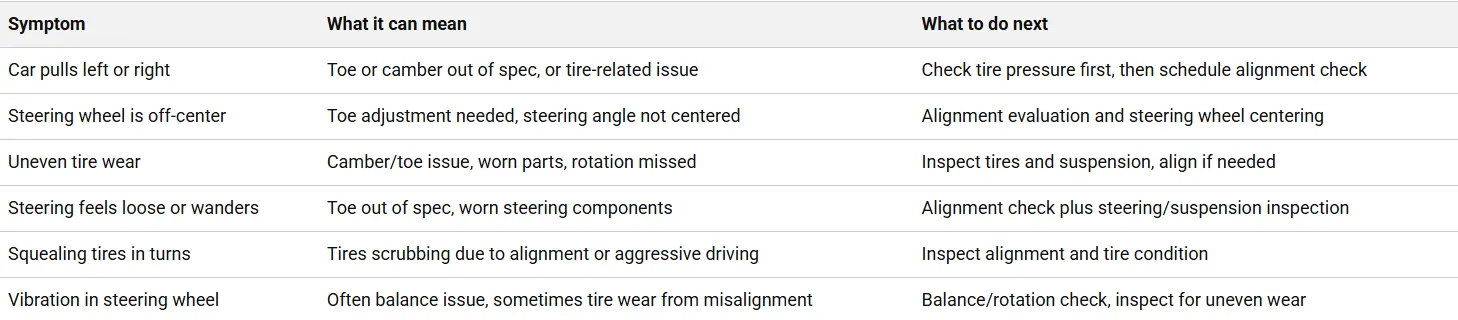
One easy self-check is to look at your front tires from the outside. If the inside edge is more worn than the rest of the tread, camber or toe could be off. Another clue is a steering wheel that’s tilted while you’re going straight on a flat road.
What causes alignment to go out?
Alignment typically doesn’t “drift” randomly overnight. It usually changes because of impacts, worn parts, or changes in ride height.
Common causes include potholes, curbs, speed bumps, and rough roads. Morristown drivers also see alignment issues after heavy rain seasons when potholes get worse. Suspension wear can also change alignment over time, especially as a vehicle ages.
How often should you get an alignment?
There isn’t one perfect interval for every driver, but there are practical guidelines that work well for most vehicles.

If you drive on rougher roads or do a lot of highway miles, you may benefit from checking more often. If you’re mostly on smooth roads and your tires wear evenly, you can usually stick with annual checks.
What happens during a wheel alignment?
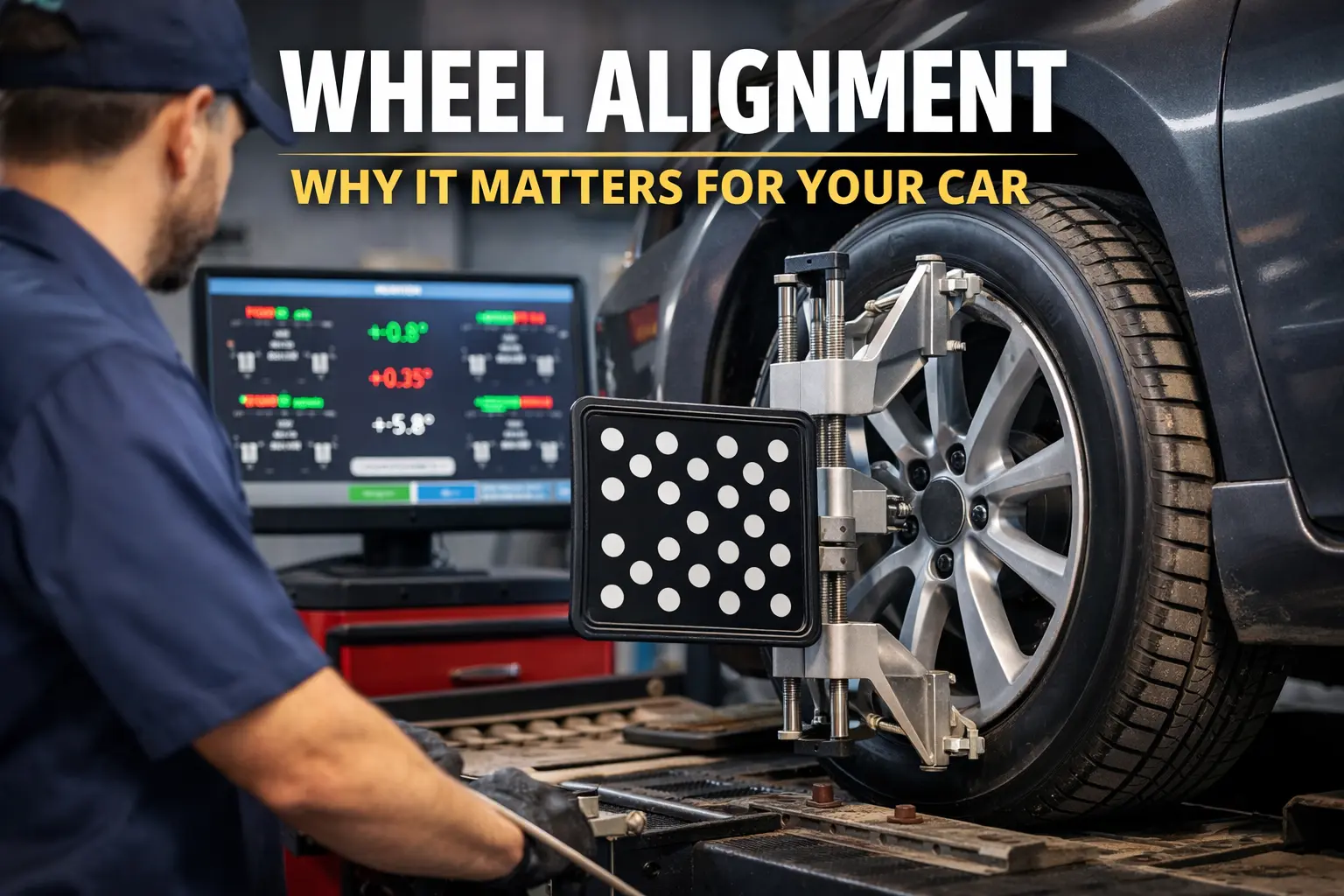
A modern alignment uses precision equipment to measure your wheel angles and compare them to factory specs. If adjustments are available, the technician will correct toe, camber, and caster based on what your vehicle allows. Some vehicles allow camber adjustment from the factory, while others require special hardware if camber correction is needed.
Many newer vehicles also have driver-assistance features that rely on sensors and cameras. If your car has advanced safety tech, alignment is even more important because the vehicle is designed to track straight and behave predictably. A good shop will also check for worn parts, because you can’t align a vehicle correctly if a steering or suspension component is loose.
Tips to maintain proper alignment longer
You can’t avoid every pothole, but you can reduce how often alignment gets knocked out.
Keep tires properly inflated because low pressure increases stress and can exaggerate pulling. Slow down for potholes, dips, and speed bumps whenever possible. Avoid clipping curbs when parking, especially with the front wheel.
Rotate your tires on schedule and pay attention to wear patterns early. If your vehicle starts pulling or the steering wheel changes position, don’t wait for the tires to “show it.” Catching alignment issues early usually saves money.
Key takeaways for drivers in Morristown
If your car doesn’t track straight, your steering wheel isn’t centered, or your tires are wearing unevenly, an alignment check should be near the top of your list. Proper alignment helps your tires last longer and helps your vehicle feel more stable in wet conditions and on uneven roads. Don’t forget to check for tire recalls. It’s a simple maintenance step that can prevent higher costs later.
If you’re shopping for a reliable used vehicle or you want help choosing something that fits Morristown roads and driving conditions, Farris Motor Company can help you find the right match. Visit Farris Motor Company to browse our inventory and start your credit pre-approval today!
Frequently Asked Questions About Wheel Alignments
How do I know if I need a wheel alignment right now?
If your car pulls to one side, your steering wheel sits off-center, or you see uneven tire wear, you likely need an alignment check. Those are the most common “right now” signs drivers notice. If the issue started after hitting a pothole or curb, get it checked sooner rather than later.
Will a wheel alignment fix steering wheel vibration?
Sometimes, but vibration is more commonly caused by wheel balancing or tire issues. If vibration happens mostly at certain speeds, balancing is often the first thing to check. If the tires have uneven wear from misalignment, alignment may be part of the solution.
How long does a wheel alignment take?
Many alignments take about an hour, but the exact time depends on the vehicle and whether parts are worn or seized. If suspension or steering components are loose, those issues should be addressed first. A proper inspection is part of doing the job right.
Do I need an alignment when I buy new tires?
In most cases, yes, it’s a smart move. New tires can wear unevenly quickly if the alignment is off, which wastes your money. An alignment check helps protect the life of the new tread.
How often should I get my alignment checked in Tennessee?
A good rule is once a year or about every 12,000 miles, plus any time you hit a big pothole or curb. Tennessee snow, rain, and road wear can create potholes that knock alignment out faster. If you notice pulling or unusual tire wear, don’t wait for your annual check.
What’s the difference between a two-wheel alignment and a four-wheel alignment?
A two-wheel alignment typically adjusts the front wheels only, which may be appropriate for some vehicles depending on suspension design. A four-wheel alignment measures and adjusts all four wheels when possible and is common for many modern cars. If your vehicle has rear alignment adjustments, four-wheel alignment is usually the better choice.