
Clean Title vs. Salvage or Rebuilt: What’s the Difference, and Which One Should You Buy?
A clean title is usually the safest and easiest choice to finance and insure, while salvage and rebuilt titles can cost less upfront but often come with more risk and extra steps.
If you’re shopping for a used car in Jefferson City or Morristown, TN, you’ll see listings that say “clean title,” “salvage,” or “rebuilt.” Those labels matter because they affect what the car is worth, how easy it is to get a loan, what your insurance company will cover, and how confident you can feel about the vehicle’s past.
This guide breaks down what each title status means, how it impacts financing and insurance, and what to watch for so you can buy with clarity.
Quick Definitions You Can Use Right Away
- Clean title: Means the vehicle doesn’t have a “brand” on the title for major damage (like being declared a total loss by an insurance carrier).
- Salvage title: Typically means an insurance company declared the vehicle a total loss due to collision, flood, or theft, and it’s not considered roadworthy as-is.
- Rebuilt title: Means the car was once salvage, then repaired and passed a state-required rebuilt inspection process to return to legal road use.
What Does a Clean Title Mean?
A clean title means the vehicle’s title isn’t branded as salvage, rebuilt, junk, flood, or similar categories. It does not mean the car has never been in an accident, and it does not automatically mean “perfect condition.” It simply means the state’s title record doesn’t show a major branding event where repair costs exceeded a specific percentage of the car's actual cash value.
In real-world terms, a clean title is usually simpler for loans, simpler for insurance, and easier to resell later. Explore our fully inspected used vehicle inventory at Farris Motor Company to browse reliable clean-title options.
What Does a Salvage Title Mean?
A salvage title generally means the vehicle was declared a total loss by an insurance company due to damage, theft recovery, or other major event. In many states, a salvage vehicle isn’t meant to be driven on public roads until it’s repaired and re-titled according to state rules.
In Tennessee, the state has specific processes and forms for salvage titling and for moving from salvage to rebuilt status. A salvage certificate serves as an ownership document for a wrecked or damaged vehicle, but it strictly prohibits the vehicle from being issued license plates or operated on Tennessee highways.
What Does a Rebuilt Title Mean?
A rebuilt title in Tennessee (often branded “Rebuilt Vehicle Anti-Theft Inspected”) means the vehicle previously had a salvage certificate after being deemed a total loss, but it was repaired and cleared through the state’s rebuilt-vehicle process so it can be titled, registered, and legally driven again.
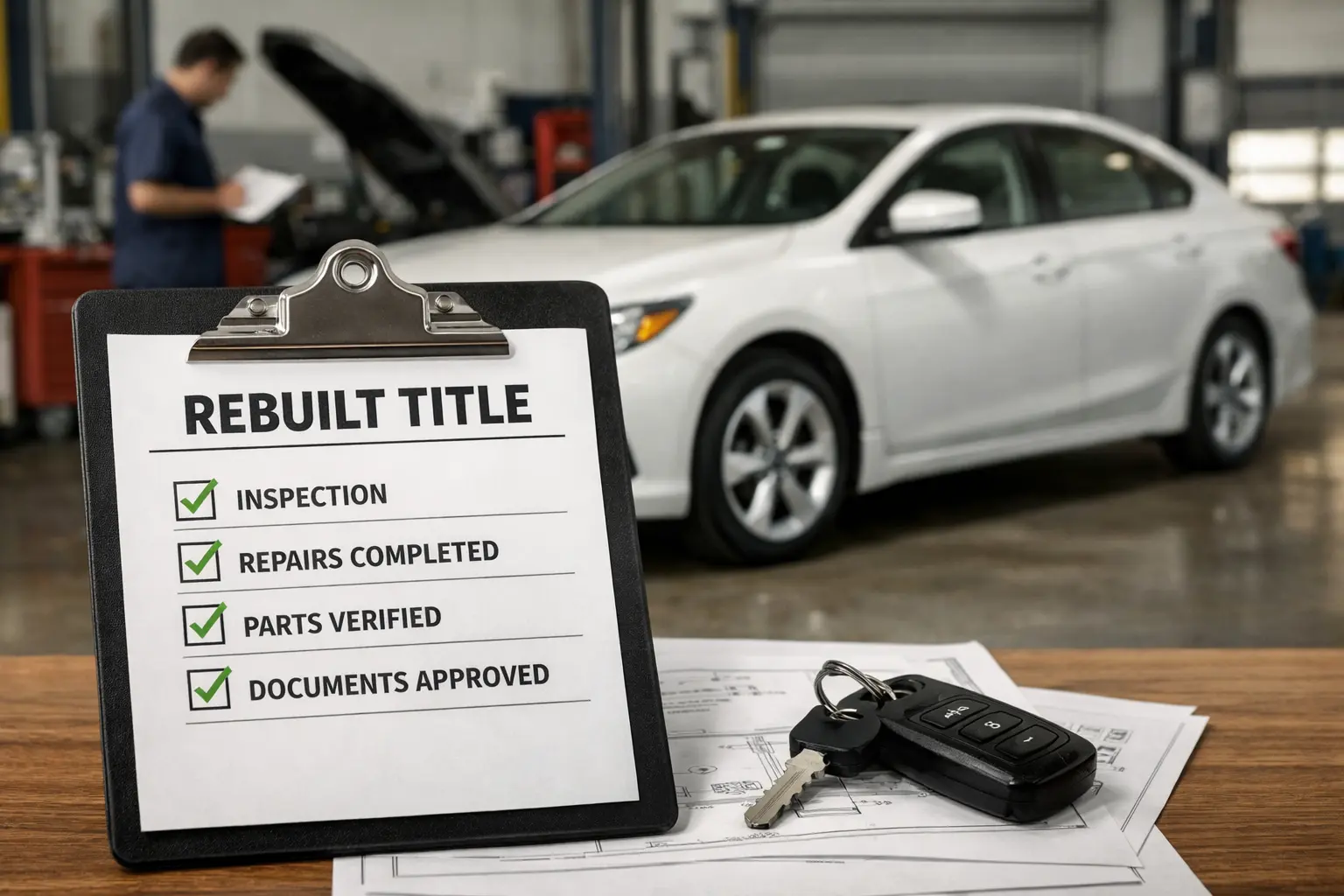
In Tennessee, converting a salvage certificate to a rebuilt title is a multi-step administrative and physical inspection process:
- Documentation & Receipts: The rebuilder must complete an Application for Motor Vehicle Identification Certification (Form RV-F1311501) and gather detailed receipts for all major component parts used in the rebuild (engine, transmission, body panels, doors, airbags).
- Photographic Evidence: Detailed photographs showing the vehicle in its wrecked, un-repaired state as well as finished photos must accompany the application to the Tennessee Department of Revenue.
- Anti-Theft Inspection: Once documentation is approved, the vehicle undergoes a physical Anti-Theft Unit inspection conducted by state law enforcement officers to verify VIN numbers and ensure no stolen parts were used.
- County Clerk Registration: Upon passing inspection, the state issues an official approval decal and letter, allowing the owner to obtain a branded rebuilt title and license plates through their local Hamblen or Jefferson County Clerk.
Because it’s still a branded title, it usually sells for 20% to 40% less than a comparable clean-title vehicle.
Clean vs. Salvage vs. Rebuilt at a Glance
(Exact rules vary by state and insurer/lender, so always verify before you buy.)
| Factor | Clean Title | Salvage Title | Rebuilt Title |
|---|---|---|---|
| Legal Road Status | Fully Street Legal | Illegal to Drive | Street Legal (State Cleared) |
| Financing & Loan Availability | Standard financing available across all major banks. | Generally impossible through traditional auto lenders. | Extremely difficult; limited to personal loans or specialty lenders. |
| Insurance Coverage | Full coverage (Comprehensive & Collision) widely available. | Uninsurable for road use. | Liability-only in most cases; full coverage rare and capped. |
| Resale & Trade-In Value | Full market value based on condition and mileage. | Scrap / parts value only. | Typically discounted 20% to 40% below clean market value. |
| State Inspection Requirement | None required for titling. | N/A (Repairs must be completed prior to application). | Mandatory Anti-Theft Unit component verification. |
⚠️ Important Legal Disclaimer on State Rebuilt Inspections
Notice regarding state inspection standards: Passing a state rebuilt title inspection (such as the Tennessee Department of Revenue Anti-Theft Unit inspection) verifies vehicle identification numbers, component provenance, and parts receipts to prevent auto theft and component fraud. State rebuilt inspections are NOT bumper-to-bumper mechanical safety certifications or structural frame alignment tests. An anti-theft inspection clearance does not guarantee that airbags, unibody integrity, wheel alignment, or electronic safety sensors meet original factory standards. Buyers considering a rebuilt title vehicle should always commission an independent inspection by a certified mechanic prior to purchase.
How Title Status Affects Financing
Rebuilt-title vehicles can be financeable, but they’re significantly harder to finance than clean-title cars. Many lenders see branded titles as higher risk because the vehicle’s true wholesale value can be difficult to establish, collateral value is questionable if repossession occurs, and the future resale market is narrow.
Here’s what commonly changes when attempting to finance a rebuilt vehicle:
- Higher Down Payment Requirements: Lenders may demand 20% to 50% down in cash to lower their loan-to-value (LTV) exposure.
- Higher Interest Rates: Because of increased risk, interest rates on branded title loans are often several percentage points higher than standard auto loan rates.
- Shorter Loan Terms: Lenders rarely extend 72-month or 84-month terms on rebuilt cars, capping financing at 24 to 48 months.
- Extensive Documentation Demands: Lenders will require full state inspection certificates, detailed body shop receipts, and sometimes an official appraisal before approving funding.
If you’re planning to finance, ask the most important question early: “Will you lend on a rebuilt title for this specific VIN?” That one sentence can save you hours of wasted paperwork. To test monthly payments on clean-title vehicles with competitive lender backing, use our car loan calculator.
Can You Finance a Salvage Title Car?
In most cases, a salvage-title car is not a candidate for traditional automotive financing. Because a salvage vehicle cannot be legally registered or operated on public roads, banks and credit unions will not accept it as collateral. If a lender does consider financing a salvage vehicle, it is typically through a personal signature loan, which carries much higher interest rates and uncollateralized loan restrictions.
How Title Status Affects Insurance
A salvage title makes insurance complicated because the vehicle is legally ineligible for road use until it is fully rebuilt and registered. With rebuilt titles, insurance coverage becomes a multi-tiered decision depending on the carrier:
- Liability Insurance: Most national insurance providers will issue basic state-minimum liability coverage for a rebuilt-title vehicle once it passes state inspection and receives valid registration.
- Comprehensive & Collision Coverage: Securing full coverage (comprehensive and collision) on a rebuilt title is exceptionally difficult. Insurers struggle to differentiate between damage sustained in the original total-loss accident versus damage from a new incident.
- Stated-Value Payout Caps: Even if an insurer agrees to write full coverage, claims payouts in a total loss event are typically capped at 60% to 70% of the vehicle’s clean market value.
What Lenders Require Matters, Too
If you finance a car, the lender mandates full coverage (comprehensive and collision) to protect their financial investment. That’s where rebuilt-title shopping gets tricky: you need a vehicle your lender will finance AND an insurer willing to write the comprehensive coverage your lender legally requires. If either side declines, the sale falls through.
What to Watch for With Salvage or Rebuilt Vehicles
A rebuilt title does not automatically mean the car is “bad,” but it does mean you need to verify far more than you would with a clean-title vehicle. The goal is to understand exactly what caused the total loss, how the repairs were conducted, and whether the purchase discount is large enough to compensate for the added risk.
The Biggest Hidden Risks Buyers Miss
- Hidden Structural and Frame Damage: Frame or unibody bent geometry can compromise crash safety zone absorption, cause permanent wheel misalignment, and lead to rapid, uneven tire wear.
- Flood and Water Exposure: In East Tennessee, water damage is a serious concern following heavy rains or flash flooding. Flood cars suffer severe electrical corrosion, computer module glitches, mold infestation, and premature rusting that may not manifest until months after purchase.
- Airbag and Safety-System Shortcuts: Airbag replacement is expensive. Dishonest rebuilders sometimes bypass SRS warning lights with resistors or install fake airbag covers without actual inflatable modules underneath.
- Title Washing and Paperwork Fraud: Unscrupulous sellers sometimes transfer damaged vehicles across state lines to clean branded status off official records. Always verify history using multiple VIN lookup tools.
A Simple Verification Checklist (Use This Before You Commit)
Before putting down cash or signing any contracts on a rebuilt-title car, complete these crucial steps:
- Run a Comprehensive History Report: Use CARFAX, AutoCheck, or the free National Insurance Crime Bureau (NICB) VINCheck to confirm original damage claims.
- Request All Repair Invoices & Photos: Demand before-and-after photos and detailed parts invoices from the rebuilder to verify what was replaced.
- Verify Airbag System Integrity: Have a technician run a diagnostic scan specifically checking SRS airbag deployment records and sensor connectivity.
- Schedule an Independent Pre-Purchase Inspection (PPI): Take the car to an independent body shop with frame-measuring equipment to verify unibody alignment.
Know What a Rebuilt Inspection Does (And Doesn’t Do)
Tennessee’s rebuilt-vehicle process involves required documentation and an Anti-Theft Unit inspection to confirm the vehicle’s identity and verify that the major component parts and paperwork support the repairs.
That inspection is vital for preventing stolen auto parts trafficking, but it is NOT a mechanical safety or roadworthiness guarantee.
When a Rebuilt Title Can Be a Smart Buy
A rebuilt title can make sense when the price discount is substantial (typically 30% to 50% below clean market value) and the original damage was cosmetic rather than structural. Excellent scenarios include:
- Hail Damage Total Losses: Vehicles written off due to extensive cosmetic denting where mechanical systems and structural frame remain untouched.
- Theft Recovery Vehicles: Cars declared total losses after being stolen, but later recovered intact after the insurance company settled the claim.
- Long-Term Cash Buyers: Buyers paying cash who plan to drive the vehicle until its end-of-life and care far more about upfront utility than future resale value.
When You Should Stick With a Clean Title
A clean title is usually the better move if you need simple financing, want comprehensive insurance options, drive frequently on interstates, or plan to trade in or resell the vehicle within a few years. It’s also the safer path if you lack the time or mechanical expertise to audit body shop repairs.
If you want a simple rule of thumb: if you need “easy, reliable, and predictable,” choose a clean title.
How Farris Motor Company Can Help
If you’re comparing a clean title vs. salvage or rebuilt and want help finding the right fit, Farris Motor Company in Jefferson City and Morristown can walk you through transparent vehicle histories so you can buy with total confidence. Start browsing our selection, and apply in minutes with our secure online credit application.
Frequently Asked Questions About Clean Title vs. Salvage/Rebuilt
What is the main difference between a clean title and a rebuilt title?
A clean title has no major total-loss brand on the record, while a rebuilt title means the vehicle was once declared a salvage total loss, but was subsequently repaired and inspected for legal road use.
Is a rebuilt title bad?
A rebuilt title isn’t automatically bad, but it does mean the vehicle experienced severe damage in its past. Buyers must inspect repairs, documentation, and safety systems far more thoroughly than with a clean-title vehicle.
Can you insure a rebuilt title car in Tennessee?
Yes, most insurance carriers in Tennessee will write liability coverage for a rebuilt-title car. However, comprehensive and collision coverage can be difficult to secure depending on the insurer.
Can you finance a rebuilt title car?
Sometimes yes, but far fewer traditional auto lenders approve branded titles. Loan terms often feature higher down payment requirements, shorter lengths, and higher interest rates.
Can you drive a salvage title car on the road?
No. A salvage-title vehicle cannot legally be driven, registered, or issued license plates on public roads until it undergoes official repairs and passes state rebuilt inspection protocols.
What’s the safest way to shop for a rebuilt title vehicle?
Start by checking VIN history, reviewing original repair receipts and before-repair photos, verifying airbag SRS light codes, and paying for an independent pre-purchase inspection by a qualified mechanic. For more vehicle purchasing insights, read our guide on how old of a car you should buy.