
How Do You Read a Vehicle History Report?
Table of Contents
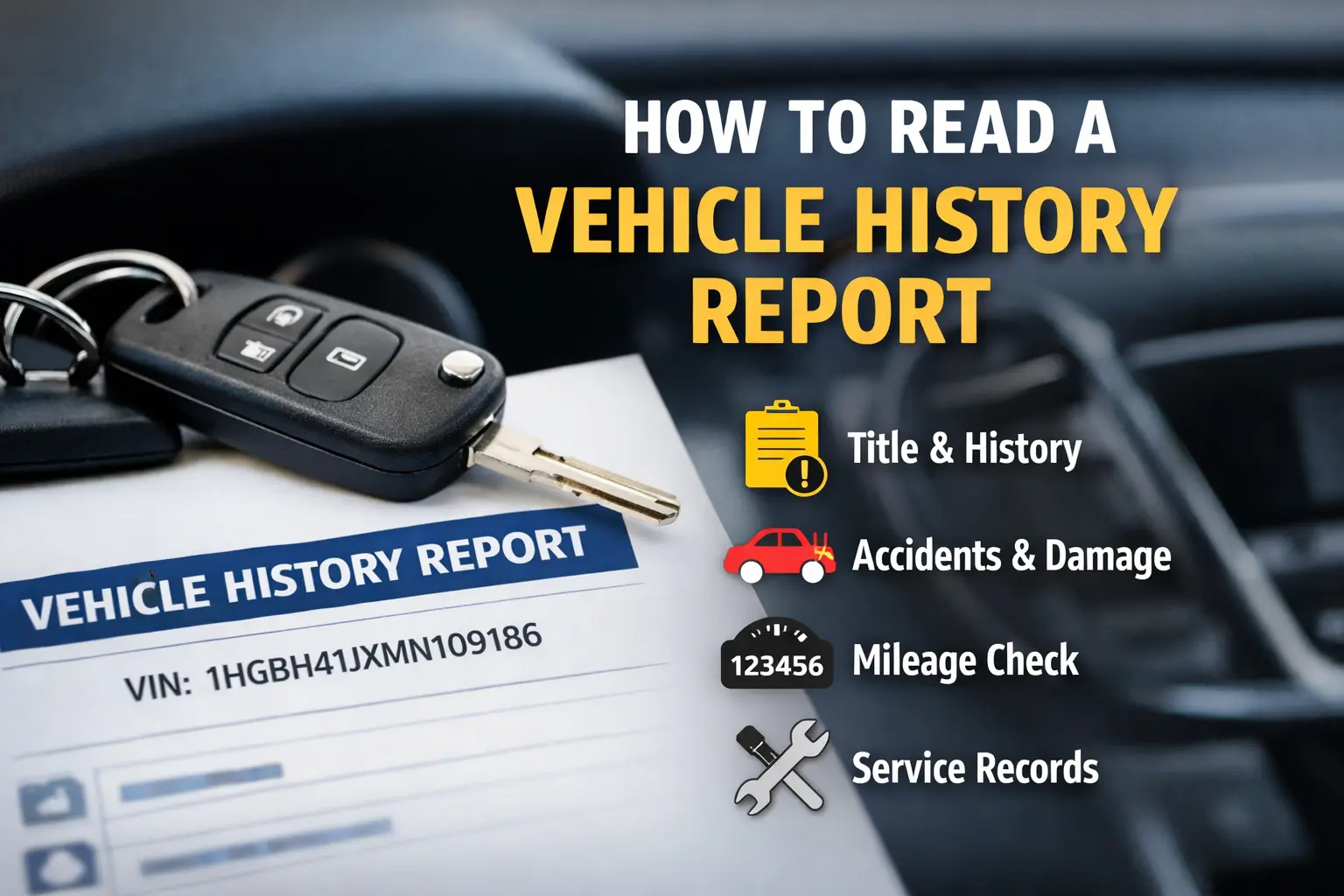
How Do You Read a Vehicle History Report?
You read a vehicle history report by confirming the VIN matches the car, then reviewing title history, accidents/damage, mileage, ownership patterns, and service notes—while treating the report as a starting point (not a substitute for an inspection).
Buying a used car in Jefferson City or Morristown, Tennessee, can be a smart move, but only if you know what you’re looking at. A vehicle history report is one of the fastest ways to spot hidden problems before you spend time negotiating or scheduling a test drive. The key is understanding what the report actually proves, what it only suggests, and what it can miss.
This guide breaks down what CARFAX and AutoCheck reports typically show, how to read them from top to bottom, and the red flags that should make you slow down (or walk away).
What Is a Vehicle History Report?
A vehicle history report is a database summary tied to a specific VIN (Vehicle Identification Number). It compiles events that were reported to participating sources over the vehicle’s life, such as title changes, registrations, some accidents and insurance claims, emissions inspections, service entries, auctions, and recalls.
Think of it like a timeline. The report is trying to answer: Where has this car been, how has it been used, and were any major issues ever recorded?
What CARFAX and AutoCheck Reports Actually Tell You
CARFAX and AutoCheck are two of the most common vehicle history report providers. They’re similar in purpose, but they can differ in coverage depending on where the car has been and which sources reported information.
Here’s what they typically help you understand:
- Whether the title is clean or branded (salvage, rebuilt, flood, lemon, etc.)
- Whether accidents or damage events were reported
- How many owners the vehicle may have had, and how long they kept it
- Whether the mileage history looks consistent over time
- Where the vehicle was registered (which can hint at weather exposure)
- Whether there are open safety recalls (often listed as a reference)
Quick comparison: CARFAX vs AutoCheck

If you can review both, great. If you only have one, you can still make a solid decision as long as you know what to verify next.
What Vehicle History Reports Do Not Tell You
This is where a lot of shoppers get surprised. A clean report does not automatically mean a clean car.
A report may not show:
- Accidents that were never reported to an insurer or participating database
- Repairs done at shops that don’t report service records
- Flood or storm damage that wasn’t officially branded on the title
- Mechanical issues like engine wear, transmission problems, or electrical faults
- Poor-quality repairs after an accident
That’s why the report should guide your inspection and questions, not replace them.
How to Read a Vehicle History Report Step by Step
If you want a simple, voice-search-friendly way to do this, follow this order every time.
1) Match the VIN and vehicle details first
At the top of the report, confirm the VIN, year, make, model, engine (if listed), and drivetrain (if listed) match the vehicle you’re shopping. If anything is off, stop and verify before reading further.
Also, compare the VIN on the report to the VIN plate on the dashboard, the driver-door sticker, and the paperwork. A mismatch is an immediate red flag.
2) Scan the “title history” section like it’s a background check
Title history is one of the most important parts of the report because it can reveal major past events. Look for words like clean title, salvage, rebuilt/reconstructed, flood, junk, lemon buyback, hail, or total loss.
A branded title doesn’t always mean “never buy it,” but it does mean “price it correctly and inspect it harder.” Many lenders and insurers treat branded titles differently, so it affects more than just resale value.
3) Look for location and registration patterns
Where a vehicle lives matters, especially in Texas. Cars that spent time in flood-prone areas can have a higher corrosion risk, even if the report looks fine.
In the timeline, note state-to-state moves and how often the vehicle changed regions. Frequent location changes can be totally normal, but they can also line up with auction movement or quick resales.
4) Check the ownership history for stability
Most reports show an estimated number of owners and the length of each ownership. In general, fewer owners with longer ownership periods is easier to feel confident about, but it’s not a rule.
What you’re really looking for is a pattern. If the car changes hands every few months, ask why.
5) Read the accident and damage entries carefully
This is where people misread reports the most. “Accident reported” can mean anything from a minor bumper tap to a major collision.
When you see an accident or damage entry, look for:
- Date and mileage at the time of the event
- Severity notes (if provided)
- Airbag deployment (very important if listed)
- “Vehicle towed” or “disabling damage” language (high concern)
- “Structural damage” indicators (high concern)
If the report shows damage but you can’t tell what it was, your next step is a pre-purchase inspection and a direct conversation about repair documentation.
6) Validate the mileage timeline for consistency
Most reports list odometer readings at certain events (registration renewals, inspections, service visits, auctions). You want the mileage to rise gradually over time.
Watch for:
- Mileage going backward
- Big jumps that don’t match the time passed
- Long gaps with no mileage records, followed by a sudden update
A single missing year isn’t automatically bad. A pattern of inconsistencies is.
7) Use service records as a bonus, not a requirement
Service entries can be helpful, but they’re often incomplete. If you see consistent oil changes, tire rotations, and major services, that’s a good sign.
If you see no service history, it doesn’t prove the vehicle wasn’t maintained. It just means the maintenance may not have been reported in that system.
8) Check recalls, but confirm them separately
Many reports list recall information, but recall status can change as repairs are completed. If a report says there’s an open recall, verify it with the manufacturer’s recall lookup using the VIN.
Open safety recalls aren’t always a deal-breaker, but you should plan to address them quickly.
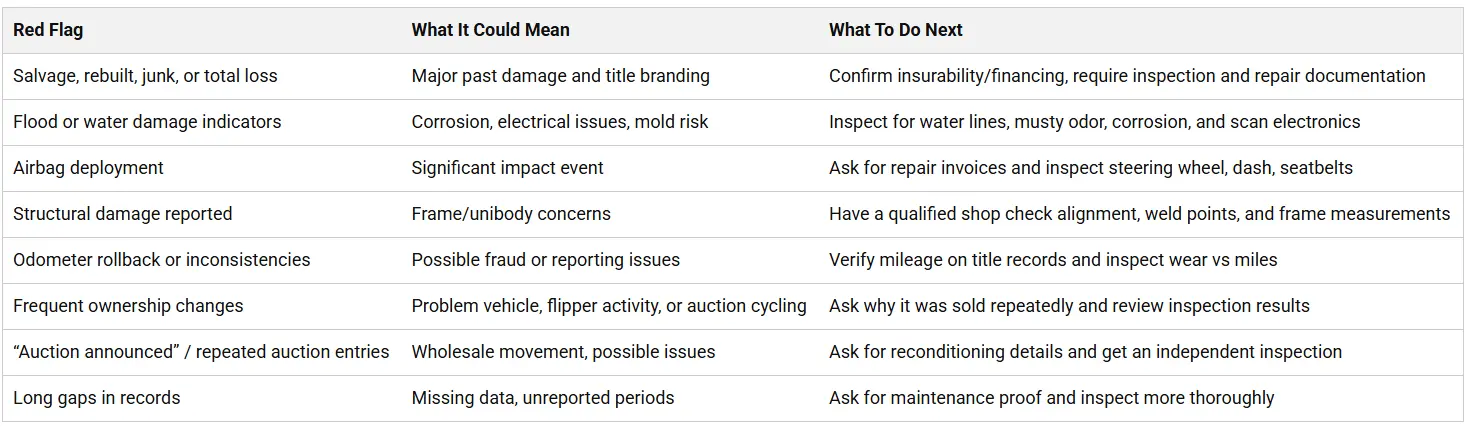
Red Flags to Watch for in CARFAX and AutoCheck Reports
Use this table as a fast “should I keep digging?” filter.
“Clean Report” vs “Good Car” in Jefferson City & Morristown: What to Do Next
In Jefferson City and Morristown, the weather can be a bigger deal than people expect. Even a clean report won’t show you things like worn suspension components, hidden rust, or electrical gremlins from water exposure.
After reading the report, do these three things:
- Do a thorough test drive on city roads and highway speeds, with the A/C running and all electronics tested.
- Get a pre-purchase inspection from a trusted mechanic, especially if the report shows any accident, title issue, or auction history.
- Ask for documentation if repairs were mentioned (body work receipts, alignment printouts, or maintenance records).
If the report and the inspection agree, you’re in a strong position to buy with confidence.
Negotiation Tip: Use the Report the Right Way
A history report is most useful when you turn it into specific questions. Instead of saying “This has an accident,” say “The report shows damage reported on this date at this mileage—what was repaired, and do you have documentation?”
Clear questions get clear answers. They also make it easier to agree on a fair price if the vehicle has a history that impacts value.
If you want help finding a used car you can feel good about, visit Farris Motor Company to browse our inventory and get pre-approved in minutes with our credit app.
Frequently Asked Questions About How to Read a Vehicle History Report
What does “damage reported” mean on a vehicle history report?
It usually means an incident was recorded by a participating source, but it may not specify severity. Treat it as a prompt to inspect the vehicle closely and ask for repair documentation.
Is CARFAX better than AutoCheck?
Neither is always “better” because they can pull from different reporting sources. If possible, review both, and always confirm findings with an inspection and paperwork.
Should I avoid a car that has an accident in the report?
Not always. A minor accident with professional repairs and clean inspection results can still be a solid buy, but structural damage, airbag deployment, or repeated damage entries are higher risk.
What is a branded title, and why does it matter?
A branded title (salvage, rebuilt, flood, lemon, etc.) indicates a significant past event. It can impact resale value, insurance options, and financing, so you should verify details before buying.
Why is there no service history on the report?
Many shops don’t report maintenance to history providers, so the data can be incomplete. A lack of service entries doesn’t prove neglect, but it does mean you should rely more on inspection and owner records.
What are the biggest red flags on a vehicle history report?
Flood/water damage, salvage or rebuilt branding, structural damage, airbag deployment, and mileage inconsistencies are the most important warnings to investigate before you buy.